


This article recaps the Psychedelic Support webinar “Art for Access: A Psychedelic Integration Model,” presented by licensed marriage and family therapist and board-certified art therapist Jennifer Allen, LMFT, ATR-BC. In this experiential session, Jennifer guided participants through her original integration framework, blending art therapy, shamanic drum journeys, and dreamwork to help bridge expanded states of consciousness with daily life. She also facilitates two retreats in Big Sur, California—one for practitioners, and one open to all—both rooted in her Art for Access approach.
With three decades of experience specializing in trauma and grief, Jennifer’s work draws on depth psychology, shamanism, and expressive arts therapy. She brings a deeply embodied and creative approach to integration, offering individuals and clinicians alike tools to translate ineffable experiences into meaningful, grounded healing.
🎥 Watch the Webinar Replay: Art for Access: A Psychedelic Integration Model with Jennifer Allen, LMFT, ATR-BC
What Is Art for Access?
At the heart of Jennifer’s model is a simple yet profound premise: art can serve as a bridge between worlds. Whether one’s expanded state arises from psychedelics, breathwork, or dreaming, the process of creative expression helps integrate insights that we can’t always verbalize.
In the webinar, Jennifer explained how Art for Access emerged from her years of working with dreams, grief, and imagery in trauma therapy. Drawing from shamanic practices, she uses the drum journey as a portal into the unconscious. Once there, image-making—through drawing, painting, or collage—becomes the path back to ordinary consciousness.
“Art provides a container,” she explained. “It gives form to what’s unformed, allowing the unseen to speak.”
This cycle of entering, accessing, and creating transforms abstract experience into embodied understanding. The art itself becomes a reflection of the psyche’s process, revealing layers of emotion, story, and transformation.
“Healing often begins where language ends.”
— Jennifer Allen, LMFT, ATR-BC
The Drum Journey: Accessing the Unconscious
Before leading participants into the experiential segment, Jennifer discussed the power of drumming as an ancient and universal tool for entering non-ordinary states.
The steady rhythm of the drum helps quiet the analytical mind and awaken the intuitive self. “When we close our eyes and let the drum guide us,” Jennifer said, “we enter the same space accessed through psychedelics—one that speaks in symbols, sensations, and metaphors.”
During the live exercise, Jennifer guided attendees through this 10-minute drum journey, inviting them to bring forward an image or feeling from an expanded state—whether from a psychedelic session, a dream, or a breathwork experience.
Afterward, participants created artwork inspired by what emerged. One participant shared her process of translating her inner imagery onto paper. Jennifer calls this practice “bringing the invisible into view.”
Integration as Bridgework
Throughout the webinar, Jennifer returned to the theme of integration as bridging realities—a movement between the symbolic and the tangible, the spiritual and the psychological.
She used metaphors like the iceberg and the river of consciousness. The iceberg is where the visible represents consciousness, and the submerged represents the unconscious. The river of consciousness is used to illustrate how expanded states flow into waking life through art and awareness.
Integration, she explained, is not about interpreting or fixing the imagery but staying in relationship with it. Art allows that dialogue to continue.
“When we create from a place of openness,” Jennifer said, “we’re not trying to understand the image—we’re allowing it to understand us.”
Learn More About Creative Pathways to Integration
- Art in Psychedelic Therapy — Exploring the therapeutic power of creative expression in integration work.
- Art Therapy and Psychedelics with Charmaine Husum, DKATI, RTC, CT — How art supports transformation during psychedelic-assisted therapy.
- Creative Expression in Spiritual Transformation and Psychedelic Integration with Dr Anne Gustafson, LMFT, PhD — Integrating mystical experiences through creative process.
- The Psychedelic Journey is a Creative Process — Viewing psychedelic healing as an inherently artistic act of meaning-making.
- Integration in Motion: Movement as an Integration Tool — Bridging insight and embodiment through body-based creative practice.
A Multimodal Path to Healing
Jennifer’s Art for Access framework integrates multiple modalities—art therapy, dreamwork, shamanic journeying, and psychedelic integration—into a unified process of transformation.
She described how these methods complement one another:
- Dreamwork opens the doorway to the unconscious and helps us navigate symbolic material.
- Shamanic drumming alters consciousness and accesses transpersonal wisdom.
- Art-making grounds those experiences in visible form, bridging the spiritual and somatic.
This triad, Jennifer shared, can deepen therapeutic outcomes and help individuals integrate even the most ineffable moments of expanded awareness. For practitioners, Art for Access offers a model that honors both the mystery and method of integration. For seekers, it invites creativity as a sacred act of meaning-making.
For Practitioners and Seekers Alike
While she designed the session for anyone interested in integration, Jennifer emphasized how creative process work can also expand a clinician’s toolkit. Art-making engages parts of the psyche that verbal therapy often can’t reach. It offers new ways to support clients in processing psychedelic or spiritual experiences.
Jennifer encouraged participants to stay curious and to bring humility into this work. “Integration isn’t linear,” she said. “It’s cyclical, intuitive, and deeply personal.”
Her approach reminds us that integration is not a single act of reflection but an ongoing dialogue—between inner and outer worlds, between self and symbol, between experience and expression.
Follow your Curiosity
Sign up to receive our free psychedelic courses, 45 page eBook, and special offers delivered to your inbox.From Webinar to Retreat: Deepening the Practice
For those called to go further, Jennifer offers two immersive retreats co-facilitated with other experienced practitioners, held among the redwoods and the ocean views of Big Sur, California.
Each retreat offers experiential learning through art process, movement, ceremony, breathwork, and low-dose ketamine sessions—creating space for both personal exploration and professional growth. Both retreats are intentionally small and intimate (limited to 12 participants). This creates a safe and transformative environment rooted in Jennifer’s Art for Access model.
- The 3-day Integration Intensive Retreat is open to all individuals seeking to deepen their personal integration practice. It invites participants to explore the intersection of art, ceremony, and expanded states as pathways to awareness and healing.
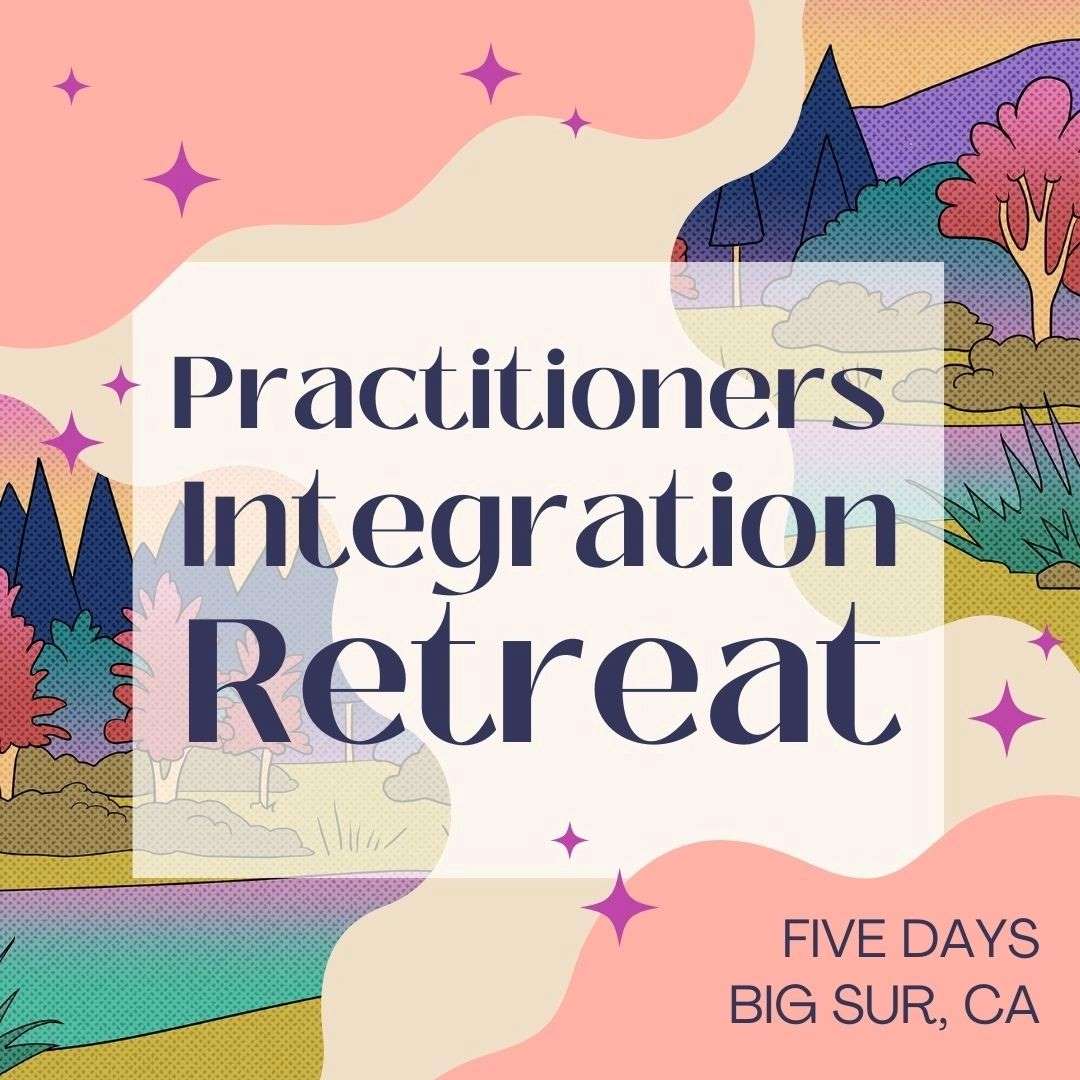
- The 5-day Practitioners Integration Retreat is designed for clinicians, facilitators, and guides. This advanced training focuses on preparation, holding space, and integration of expanded states. It aims to help practitioners refine their capacity to support others while deepening their own psycho-spiritual development.
Both retreats are intentionally small and intimate (limited to 12 participants), creating a safe and transformative environment rooted in Jennifer’s Art for Access model.
As Jennifer explains, “The retreat allows practitioners to work with their own psycho-spiritual development, because we can only hold others as deeply as we’ve held ourselves.”
Learn more or apply for upcoming retreat dates here:

Closing Reflection
Jennifer Allen’s Art for Access reminds us that healing often begins where language ends. Art, rhythm, and imagination become the bridges that help us move between the mystical and the mundane, anchoring insights from expanded states into the rhythm of everyday life.
As she shared in closing, “Love is the best protection from the virus of fear.”
By engaging creativity as part of integration, we not only make meaning from our journeys—we participate in the ongoing art of becoming whole.
Watch the full replay: https://youtu.be/-yTK4VG1FpI
About Jennifer Allen, LMFT, ATR-BC
Jennifer Allen is a licensed marriage and family therapist and board-certified art therapist with over 30 years of experience specializing in trauma and grief. She is the author of Boneknowing and a workshop and group facilitator.
In 2018, she received her Certificate in Psychedelic-Assisted Therapy and Research from CIIS and completed ketamine-assisted psychotherapy (KAP) training. A full mesa carrier and student of shamanism, Jennifer also trained in Depth Hypnosis and yoga. She currently offers clinicians’ integration retreats and therapeutic groups that bridge art, dreamwork, and expanded states of consciousness.
Resources from the Webinar
🌐 Connect with Jennifer Allen & Explore Resources Shared:
- Connect with Jennifer Allen on LinkedIn
- Learn more about her work on her website BoneKnowing.com
- Download the handout from the webinar
- Check out Jennifer’s upcoming retreats in Big Sur, CA:
- Watch Jennifer’s Shamanic Drum Journey (10 minutes)
🎓 Learn with Psychedelic Support:
- Explore Upcoming Webinars in our Monthly Speaker and Professional Networking Series
- Easily Earn CE Credits from our Speaker Series Webinars
- Get this Free Course: Riding the Wave — Principles of Psychedelic Harm Reduction
- Access All Free Courses and even earn CE credits!
- Browse all Education Offerings from Psychedelic Support


